
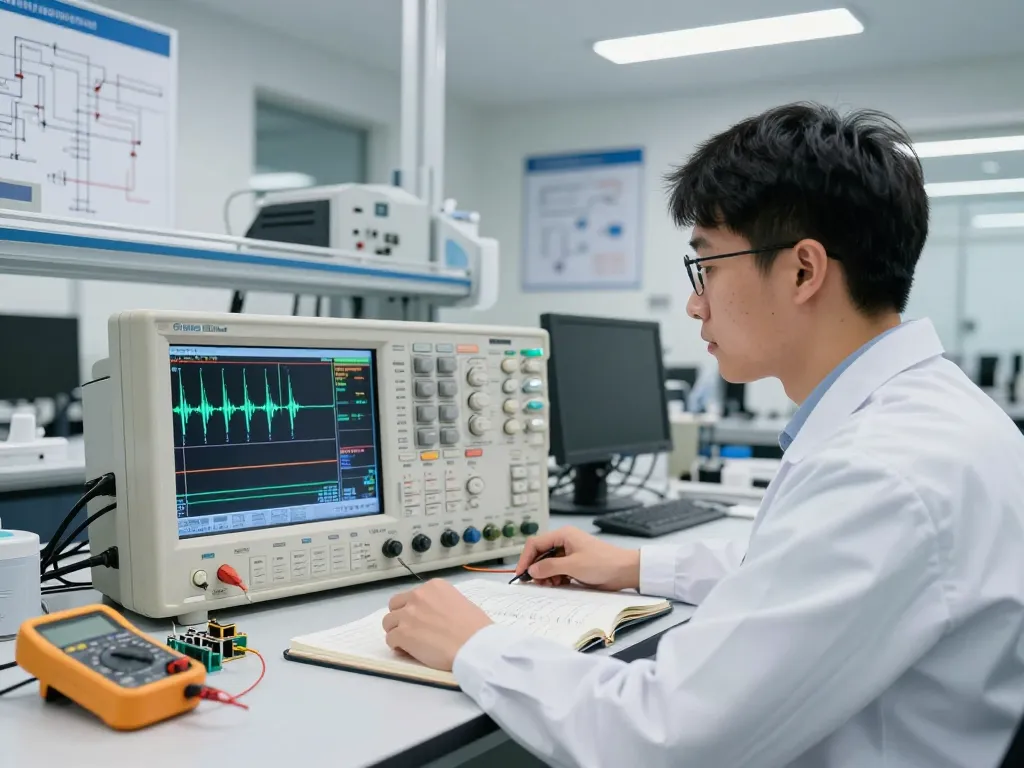
Introduction to Benchtop Oscilloscopes
Benchtop oscilloscopes are invaluable tools for professionals and hobbyists alike, providing precise waveform visualization for various applications in electronics. These sophisticated instruments are capable of handling complex signal analysis, making them essential in educational, research, and industrial environments. As we delve deeper into the world of signal analysis, understanding what is a benchtop oscilloscope is pivotal to making informed decisions when selecting the right equipment for testing and measurement.
What is a Benchtop Oscilloscope?
A benchtop oscilloscope is a type of electronic test instrument designed to visually represent electrical signals as waveforms on a screen. Unlike handheld models, benchtop oscilloscopes are typically larger, offer more features, and provide enhanced performance due to their advanced components and capabilities. They are widely used for analyzing various types of signals in numerous applications, including troubleshooting circuits, debugging design issues, and performing research.
Key Applications in Signal Analysis
Benchtop oscilloscopes are utilized across multiple sectors, including electronics design, telecommunications, and automotive engineering. Some of the key applications include:
- Circuit Debugging: Engineers use oscilloscopes to identify faults and anomalies in electronic circuits.
- Signal Integrity Analysis: Ensuring that signals transmitted over a medium maintain their shape and quality.
- Measurement of Signal Properties: Capturing voltage levels, rise times, and frequency components of electrical signals.
- Development and Testing: Used extensively in R&D labs for testing new designs before they enter full production.
Comparative Overview with Other Oscilloscope Types
When comparing benchtop oscilloscopes to handheld counterparts, several distinct advantages become apparent. Benchtop models typically offer larger screens, greater bandwidths, and more powerful processors, allowing for advanced functionalities such as mathematical analysis, automated testing, and storage of measurement data. Handheld oscilloscopes, while portable, often lack the depth of features and performance that can be crucial in professional settings.
Understanding the Features of Benchtop Oscilloscopes
To choose the right benchtop oscilloscope, it is important to recognize the key features that differentiate them from one another. These features can greatly influence the scope’s performance in your specific application.
Bandwidth and Sample Rate Explained
Bandwidth refers to the range of frequencies that an oscilloscope can measure effectively. A higher bandwidth allows for accurate representation of faster signals, crucial for modern electronics that operate at high frequencies. Sample rate, on the other hand, indicates how many samples the oscilloscope captures per second. These two metrics directly affect the oscilloscope’s ability to display complex waveforms accurately.
Channel Options and Their Benefits
Most benchtop oscilloscopes feature multiple channels, allowing users to observe and compare different signals simultaneously. This is particularly useful when analyzing components that interact with each other or systems that produce multiple outputs. Two-channel and four-channel oscilloscopes are common, but more advanced models may offer even more channels, giving engineers greater flexibility in their testing.
Display Technology and User Interface
The display technology of an oscilloscope plays a critical role in usability. Modern benchtop oscilloscopes often feature high-resolution LCD screens with touch interaction, allowing for intuitive navigation and manipulation of waveforms. A user-friendly interface can significantly reduce the learning curve for beginners, enabling them to take precise measurements quickly.
Choosing the Right Benchtop Oscilloscope
Selecting the appropriate benchtop oscilloscope is essential for effective signal analysis. Various factors must be considered, including performance specifications and intended applications.
Factors to Consider: 110MHz vs 200MHz
When choosing between oscilloscopes with different bandwidths, such as 110MHz and 200MHz, consider the nature of the signals you will be working with. A 200MHz oscilloscope can capture faster signals with greater accuracy, making it ideal for high-speed digital applications and RF measurements. However, for most standard electronic work, a 110MHz model often suffices while being more budget-friendly.
Brand Comparisons: Why Choose Hanmatek?
Hanmatek is recognized for its high-performance benchtop oscilloscopes that cater to both professionals and hobbyists. Their models, such as the DOS1104 and DOS1202, offer exceptional bandwidth and user-friendly interfaces at competitive prices. Choosing a trusted brand like Hanmatek not only ensures reliable performance but also excellent customer support and product warranties.
Cost Considerations and Budgeting for Equipment
When budgeting for a benchtop oscilloscope, consider not only the initial purchase price but also ongoing costs such as maintenance, additional probes, and potential upgrades. Higher-end models may offer more features, but often come with increased costs. It’s essential to balance performance needs with budget constraints to ensure a wise investment.
Best Practices for Using Benchtop Oscilloscopes
Maximizing the effectiveness of a benchtop oscilloscope involves understanding setup procedures and operational best practices. Implementing these practices can ensure accurate and reliable measurements.
Setup Tips for Accurate Measurements
To achieve precise results, it is crucial to properly set up your oscilloscope. Start by calibrating the device and ensuring all probes are connected securely. Use the appropriate voltage settings and grounding techniques to eliminate noise interference and ensure clean signal readings.
Common Mistakes to Avoid in Signal Testing
Many users, particularly beginners, may overlook critical steps during testing. Common mistakes include:
- Incorrect probe attenuation settings
- Failing to ground the oscilloscope properly
- Neglecting to adjust time base settings for signal clarity
Awareness of these issues can help avoid inaccuracies and improve measurement reliability.
Maintenance to Ensure Longevity and Performance
Regular maintenance is vital for prolonging the lifespan of a benchtop oscilloscope. This includes cleaning the device, checking connections, and performing periodic calibrations as recommended by the manufacturer. Keeping the operating software up to date is also essential for optimal functionality.
Future Developments in Oscilloscope Technology
The landscape of oscilloscope technology is continuously evolving, driven by advancements in electronics and computing. Understanding future trends can help professionals stay ahead of the curve.
Emerging Trends for 2026 and Beyond
As technology progresses, we anticipate enhancements in processing power, bandwidth capabilities, and user interfaces. Features such as deeper integration with cloud services for data storage and advanced machine learning algorithms for signal analysis may become standard, facilitating even more sophisticated testing and debugging processes.
Integrating Advanced Features in Signal Monitoring
Future oscilloscopes are likely to incorporate advanced signal processing features that allow for real-time analytics, making it easier to diagnose problems in complex systems. Enhanced triggering systems may also emerge, enabling better capture of sporadic signal events.
Real-World Applications in Engineering and Education
The application of benchtop oscilloscopes in various fields will continue to expand. In engineering, their role in the design and validation of new technologies is pivotal, while educational institutions benefit from their integration into curricula, providing students with hands-on experience in electronics.
What are the advantages of a benchtop oscilloscope?
Benchtop oscilloscopes offer several advantages, including superior performance, greater reliability, and enhanced features compared to their portable counterparts. They are designed to handle demanding tasks, making them ideal for professionals who require precision and ease of access.
How do benchtop oscilloscopes compare to handheld models?
While both benchtop and handheld oscilloscopes serve similar purposes, benchtop models excel in performance, screen size, and functionality. Handheld versions are favored for portability, but often at the expense of features and measurement quality.
Can beginners effectively use a benchtop oscilloscope?
Yes, beginners can effectively use benchtop oscilloscopes, especially those with user-friendly interfaces and clear instructions. Many manufacturers provide extensive support materials, making it easier for novices to learn the basics of signal analysis.
What are the essential features to look for?
When selecting a benchtop oscilloscope, look for key features such as bandwidth, sample rate, number of channels, display quality, and user interface. These elements will directly affect your ability to analyze signals with precision and ease.
How can I troubleshoot common issues with oscilloscopes?
Common troubleshooting steps include checking probe connections, verifying calibration settings, and ensuring that power supplies are stable. Additionally, consulting the user manual for specific errors can provide guidance on resolving issues quickly.