
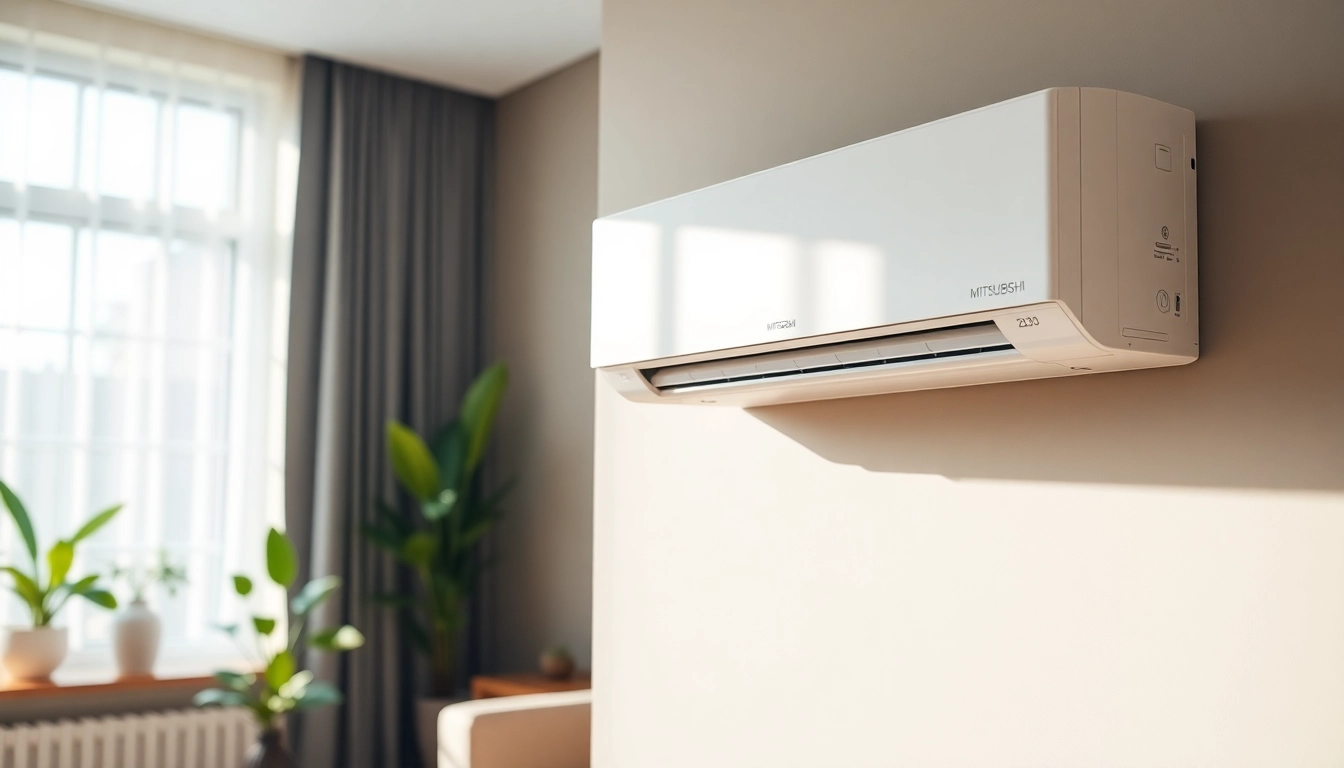
Understanding Mitsubishi Mini Split AC Systems
What is a Mitsubishi Mini Split AC?
The mitsubishi mini split ac is a popular choice among homeowners and businesses for efficient climate control. Unlike traditional central air systems that rely on ducts to circulate air, mini split ACs utilize an innovative ductless design. They consist of two primary components: an outdoor unit and one or multiple indoor units that deliver cooled air directly into individual rooms or zones.
These systems are designed to provide targeted cooling and heating, allowing users to adjust the temperature in different spaces according to their specific needs. With advanced inverter technology, Mitsubishi mini split AC units offer precise temperature control and can operate effectively even in extreme weather conditions.
Key Components and Features
The key components of a Mitsubishi mini split AC system include:
- Outdoor Unit: This unit houses the compressor and condenser. It expels the heat collected from the indoor air.
- Indoor Unit: This unit absorbs indoor heat and cools the air before circulating it back into the room. Mitsubishi offers various indoor models such as wall-mounted, ceiling-mounted, and floor-mounted units.
- Refrigerant Lines: These insulated lines run between the indoor and outdoor units, transporting refrigerant gas to facilitate heat exchange.
- Remote Control and Thermostat: The indoor units typically come with remote controls, allowing users to adjust settings conveniently.
Many models also feature multi-zone capabilities, enabling you to cool or heat multiple rooms with a single outdoor unit. This flexibility is one of the hallmarks of Mitsubishi mini split AC systems.
How Mini Split Systems Work
The operation of a Mitsubishi mini split AC system is based on the principles of thermodynamics. Here’s how it works in a step-by-step breakdown:
- Heat Absorption: The indoor unit collects warm air from the room and passes it over the evaporator coils, where refrigerant absorbs the heat.
- Heat Transfer: The refrigerant, now warmed, travels through the refrigerant lines to the outdoor unit.
- Heat Release: In the outdoor unit, the compressor increases the refrigerant’s pressure and temperature, allowing it to release the absorbed heat into the outside air.
- Cycle Repeats: The cooled refrigerant then returns to the indoor unit, and the cycle begins anew, lowering the indoor temperature.
Benefits of Choosing Mitsubishi Mini Split AC
Energy Efficiency and Cost Savings
Mitsubishi mini split AC systems are renowned for their energy efficiency. Many models boast SEER (Seasonal Energy Efficiency Ratio) ratings higher than 20, significantly reducing electricity bills compared to traditional HVAC systems. By cooling only the occupied spaces, homeowners can save on energy usage, making these systems ideal for smaller homes or areas that require specific temperature control.
Furthermore, the inverter technology used in these units modulates the compressor speed, adjusting the cooling power based on current demand. This results in less energy wasted, leading to long-term cost savings and a smaller carbon footprint.
Quiet Operation and Comfort
No one enjoys the intrusive noise of an air conditioning system disrupting their tranquility. Mitsubishi mini split AC units are designed to operate quietly, with indoor units often generating sound levels as low as 19 dB, which is comparable to a whisper. This feature makes them ideal for bedrooms, home offices, and any other spaces where noise might be a concern.
Moreover, the precise temperature control provided by these systems leads to improved comfort levels. Users can maintain a stable ambient temperature without the fluctuations often experienced with traditional HVAC setups.
Space-saving Design Advantages
One of the most significant advantages of Mitsubishi mini split AC systems is their compact and flexible design. The absence of ductwork allows for the installation of indoor units in virtually any location, whether on walls, ceilings, or even floors. This flexibility is especially beneficial for retrofitting older homes or for spaces with unique architectural features that can hinder conventional HVAC systems.
Many indoor units also feature sleek designs that blend seamlessly into the room’s decor, ensuring that aesthetics are not compromised while enhancing comfort.
Installation Process of Mitsubishi Mini Split AC
Required Tools and Equipment
Installing a Mitsubishi mini split AC system requires specific tools to ensure a proper setup. Here’s a list of essential items:
- Drill and drill bits for making holes
- Line set, which includes refrigerant lines
- Nylon or PVC tubing for drainage
- Electrical tools, including wire strippers and screwdrivers
- Level for proper alignment
- Measuring tape for accurate installation
Step-by-Step Installation Guide
The installation process of a Mitsubishi mini split AC system can be broken down into several key steps:
- Choose the Location: Select appropriate spots for the indoor and outdoor units, ensuring access to power and airflow.
- Install the Indoor Unit: Mount the bracket on the wall and attach the indoor unit, ensuring it is level.
- Drill a Hole: Drill a hole through the wall to connect the indoor and outdoor units.
- Connect Refrigerant Lines: Thread the refrigerant lines, electrical wiring, and drainage tubing through the drilled hole and connect to the indoor unit.
- Install the Outdoor Unit: Secure the outdoor unit on a stable surface and connect the refrigerant lines and electrical wiring to it.
- Purge and Charge the System: Use a vacuum pump to remove air from the refrigerant lines and charge the system with refrigerant as needed.
- Test the System: Power up the unit to ensure it operates correctly.
Professional vs. DIY Installation
While it is possible to install a Mitsubishi mini split AC system as a DIY project, hiring a professional is often recommended for optimal performance and to ensure that warranties remain intact. Professionals have the training and experience to handle refrigerant safely and comply with local regulations, ensuring a seamless installation process.
Moreover, an expert installation can provide peace of mind, knowing that the system will operate efficiently and effectively for years to come.
Maintenance Tips for Mitsubishi Mini Split AC
Regular Cleaning and Filter Changes
To maintain optimal performance and efficiency, regular upkeep of your Mitsubishi mini split AC system is essential. Cleaning the outdoor unit regularly to remove debris and dirt can enhance air flow and prolong its lifespan. Additionally, indoor unit filters should be cleaned or replaced at least every three months. A clean filter ensures that the system operates at peak efficiency and maintains good air quality indoors.
Troubleshooting Common Issues
If your Mitsubishi mini split AC system is malfunctioning, several common issues can usually be addressed without calling in a professional. These include:
- No Cooling: Check if the thermostat is set correctly and if the air filter is clean.
- Strange Noises: Ensure that the indoor unit is securely mounted and that no debris is obstructing the fan.
- Water Leaks: Inspect the drainage line for clogs or blockages.
When to Call a Technician
While many small issues can be resolved independently, it is crucial to contact a professional if you notice signs of refrigerant leaks, persistent unusual sounds, or if the unit does not operate at all despite troubleshooting. A technician can provide insights on complex repairs and ensure the proper handling of refrigerant, which is critical for maintaining your system’s efficiency and safety.
Comparing Mitsubishi Mini Split AC to Other Cooling Options
Mini Split vs. Central Air Conditioning
When considering cooling options, it’s essential to understand the differences between Mitsubishi mini split AC systems and traditional central air conditioning. Central systems require extensive ductwork to distribute air, which can lead to energy loss due to leaks or inefficiencies eventually resulting in higher costs. In contrast, mini splits are ductless, providing a more straightforward installation and greater energy efficiency. Furthermore, mini splits allow for zoned cooling, which enables users to control the temperature in individual rooms.
Pros and Cons of Ductless Systems
While ductless systems like the Mitsubishi mini split AC have several advantages, they also come with a few factors to consider:
- Pros:
- Energy efficiency through targeted cooling
- Quiet operation
- Flexible installation with no ductwork needed
- Zoned control for personalized comfort
- Cons:
- Higher upfront installation costs compared to window units
- Aesthetic concerns regarding the placement of indoor units
- Maintenance of multiple units if installed throughout the home
Is a Mini Split Right for Your Space?
Determining whether a Mitsubishi mini split AC is suitable for your space involves assessing various factors such as the size of the area, existing insulation, and intended use. For smaller rooms, or homes without existing ductwork, mini splits may be the ideal choice. They can adapt to a variety of environments, making them a versatile solution for cooling in residential and commercial settings alike.
Frequently Asked Questions
1. How efficient are Mitsubishi mini split AC systems?
Mitsubishi mini split AC systems are highly efficient, with SEER ratings often exceeding 20, resulting in considerable energy savings when compared to traditional HVAC systems.
2. Can Mitsubishi mini split AC be used for heating?
p>Yes, many Mitsubishi mini split systems have heat pump capabilities, enabling them to provide both cooling and heating effectively, even in colder climates.
3. How often should I clean the filters in my mini split AC?
It is recommended to clean or replace the indoor unit filters every three months to maintain optimal airflow and efficiency in your Mitsubishi mini split AC.
4. Are Mitsubishi mini split systems noisy?
No, Mitsubishi mini split systems are designed to operate quietly, with some models producing sound levels as low as 19 dB, comparable to a whisper.
5. What is the lifespan of a Mitsubishi mini split AC unit?
With proper maintenance, a Mitsubishi mini split AC unit can last between 15 to 20 years, depending on usage and care.